
Leather seats add comfort and value to a vehicle, but they are also one of the easiest interior surfaces to damage with the wrong cleaning routine. If you have ever wondered how to clean leather car seats without leaving them dry, faded, or streaky, the short answer is that leather needs the right products, gentle technique, and regular conditioning to stay soft. This guide walks through a safe, professional-grade process you can follow at home in Massachusetts, plus the point at which a deeper treatment is worth handing to a mobile detailer.
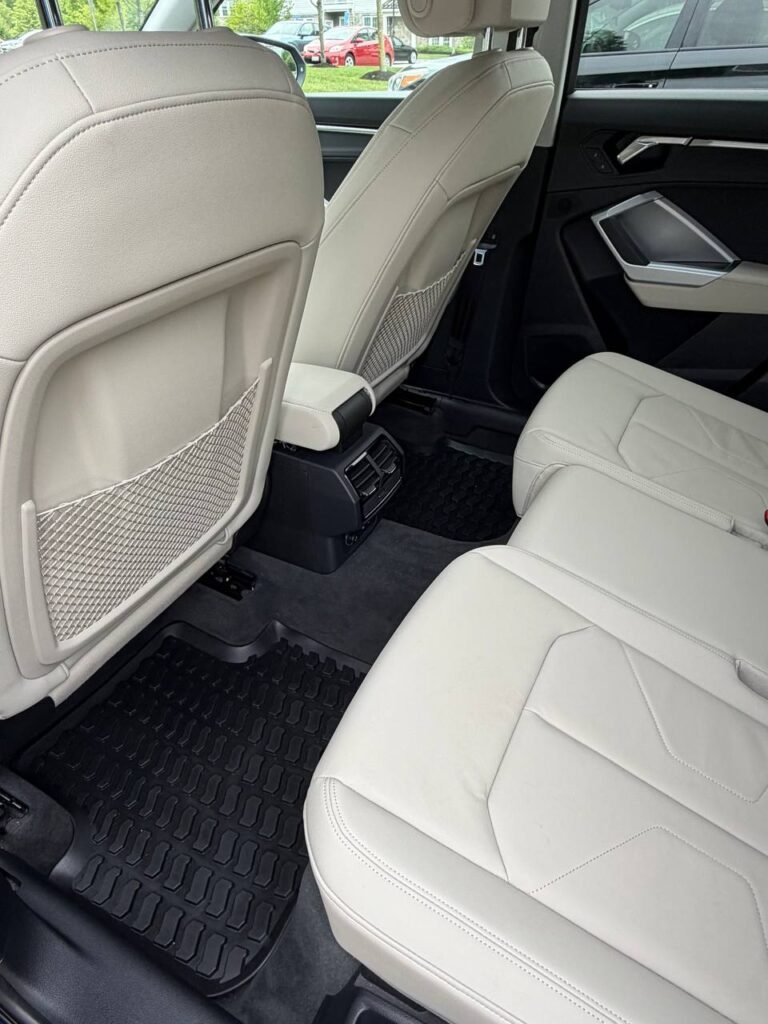
Massachusetts is genuinely hard on leather. Winter road salt tracks in on shoes and settles into seat seams, summer sun through the windshield bakes and fades unprotected hide, and the constant temperature swings between a cold morning and a heated cabin pull moisture out of the material. Left alone, that combination leads to stiff, cracked seats within a few years. A little maintenance prevents almost all of it.
Know What Kind of Leather You Actually Have
Before any product touches a seat, it helps to know what you are working with, because “leather” in modern cars is rarely one thing.
- Coated or finished leather — the most common type in mainstream vehicles. It has a protective factory topcoat, which is why spills usually bead up before soaking in. This is the most forgiving type to clean.
- Perforated leather — used on ventilated and heated seats. The tiny holes let air through, but they also let liquid cleaner sink below the surface, where it is nearly impossible to extract. Perforated seats need less product and a barely damp cloth.
- Leatherette or vinyl — synthetic upholstery found in many trims. It cleans much like coated leather but does not need conditioner in the same way.
If you are not sure, treat the seat as coated leather and keep every product application light. When in doubt, less is safer.
The Tools You Need
You do not need a garage full of equipment. A safe leather cleaning kit is short:
- A pH-balanced leather cleaner (avoid all-purpose degreasers, dish soap, and household wipes)
- A soft horsehair or nylon detailing brush for seams and grain
- Two clean microfiber towels — one to clean, one to dry
- A quality leather conditioner with UV protection
- A vacuum with a crevice tool
Skip the “leather wipes” sold at checkout counters. Most contain solvents that strip the finish over time and leave a temporary shine that dries the material underneath.
How to Clean Leather Car Seats Step by Step
1. Vacuum first
Grit is the enemy of leather. Sand, salt crystals, and crumbs act like sandpaper every time you sit down, wearing through the topcoat at contact points. Vacuum the seat, then run the crevice tool along every seam and the gap where the backrest meets the base.
2. Test your cleaner
Apply a small amount of cleaner to a hidden area — the lower side bolster or the seam behind the seat — and wipe. Check for any color transfer onto the towel or dulling of the finish before you continue.
3. Work one section at a time
Spray the cleaner onto your microfiber towel or brush, not directly onto the seat, especially with perforated leather. Agitate gently in small circles to lift oils and dirt from the grain, then wipe the residue away with the second dry towel before it air-dries. Work the driver’s seat in halves so cleaner never sits long enough to soak in.
4. Address the high-contact zones
The driver’s outer bolster, the steering-wheel-side of the seat, and the front edge take the most wear from getting in and out. These usually need a second light pass. Use the brush to coax dirt out of the grain rather than pressing harder.
5. Dry completely
Never leave a leather seat wet. Buff it dry with a clean towel and let the cabin air out with the windows cracked before the conditioning step.
Conditioning: The Step Most People Skip
Cleaning removes dirt, but it also removes some of the oils that keep leather flexible. Conditioning replaces them. This is what actually prevents cracking, and it is the difference between seats that look tired at year three and seats that look new at year seven.
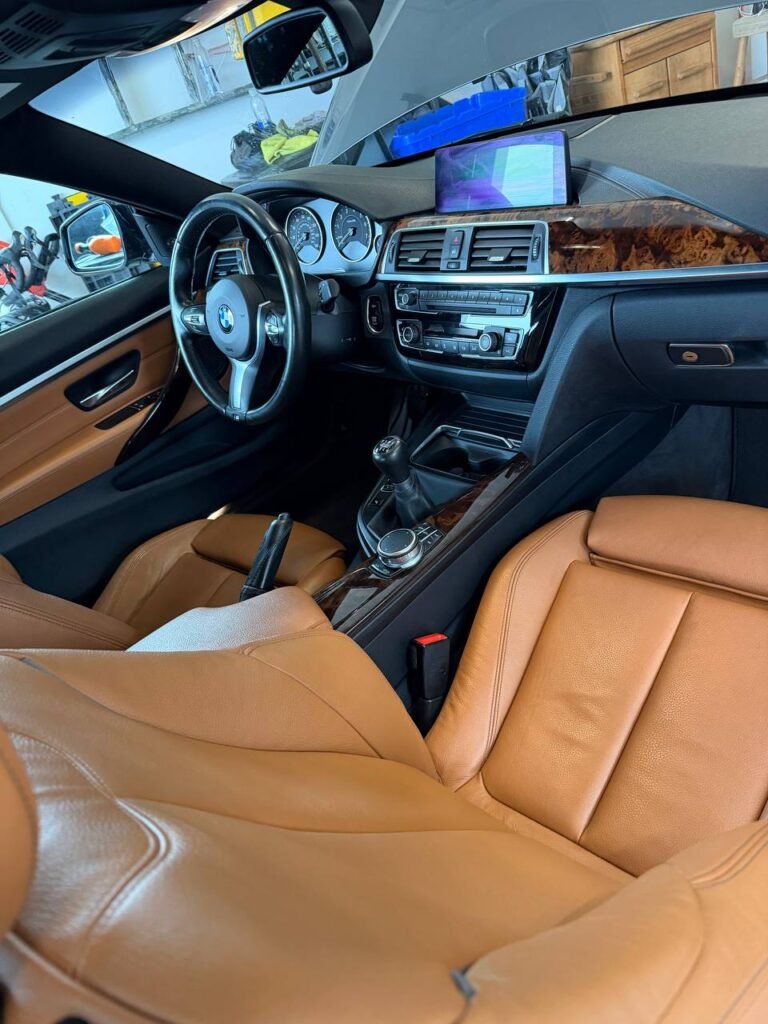
Apply a thin, even coat of conditioner with a clean towel, let it absorb for the time the product recommends, then buff off any excess so the surface is not greasy or slippery. In Massachusetts, conditioning every two to three months is a sensible rhythm — more often for a car that lives outside through the summer, since UV exposure is the single biggest driver of fading. A conditioner with UV inhibitors doubles as sunscreen for your seats.

Common Leather Mistakes to Avoid
- Using too much water or product. Saturated leather, especially perforated leather, traps moisture underneath and can lead to odor or a spongy feel.
- Reaching for household cleaners. Dish soap, glass cleaner, and disinfecting wipes are far too harsh and strip the protective coating.
- Letting a spill sit. Coffee, road salt, and denim dye transfer are much harder to remove once they set. Blot spills immediately.
- Skipping the dry step. Air-drying leaves streaks and water spots. Always buff dry.
- Over-conditioning. A greasy seat attracts dust and can become slick. A thin coat is enough.
How to Protect Leather Seats Year-Round in Massachusetts
Interior upholstery care is part of the routine vehicle maintenance recommended by the nonprofit Car Care Council, which publishes seasonal checklists worth pairing with your detailing schedule.
The best leather care is the kind that prevents damage before it starts. A few small habits go a long way in a New England climate:
- Block the sun. A folding windshield sunshade dramatically cuts the UV and heat that fade and dry leather during summer parking. It is the cheapest protection you can buy.
- Knock off the salt. In winter, brush snow and salt off your shoes before getting in, and keep a small towel in the car to blot melt-water off the seat edges.
- Handle spills on the spot. Keep a microfiber cloth in the glovebox so a spilled coffee or a wet dog gets blotted before it sets into the grain.
- Mind denim and dye transfer. Dark new jeans can bleed onto light-colored leather. A periodic clean keeps that transfer from becoming permanent.
- Recondition after big temperature swings. The stretch from freezing mornings to a hot cabin is what opens tiny cracks, so keep up the conditioning schedule through the shoulder seasons.
None of this takes more than a minute here and there, and together it is the difference between leather that ages gracefully and leather that looks worn long before the rest of the car does.
How to Handle Specific Leather Problems
General cleaning keeps leather healthy, but a few specific issues come up often enough in Massachusetts vehicles to be worth their own approach.
Ink and dye transfer
Ballpoint ink and the blue dye that bleeds from new denim onto light-colored seats are two of the most common stains we see. Both respond best to early action and a dedicated leather cleaner worked gently with a soft brush. Avoid alcohol-based “hacks” from the internet — they can lift the stain but also strip the finish and leave a dull patch that looks worse than the original mark. If the transfer has set for weeks, treat it as a professional job rather than risking the finish.
Cracks and dryness
Once leather cracks, the damage cannot be reversed — only slowed. Early dryness, though, is very recoverable. If the surface feels stiff or looks matte instead of softly satin, a restorative conditioning treatment over two or three sessions a week apart can bring much of the suppleness back. This is exactly the kind of condition where the New England climate does its damage quietly over a winter of dry cabin heat.
Mold and mildew
A car that sat closed through a humid stretch — common near the coast — can develop mildew on the seats. Wipe it away with a cloth dampened in a mild leather-safe solution, dry thoroughly, and get moisture out of the cabin, since mildew always returns if the underlying dampness stays. Never soak the seat trying to “kill” it; that only adds the moisture mold needs.
Light Leather vs. Dark Leather
Color changes the care routine more than most owners expect. Light leather — beige, cream, tan — shows dye transfer, denim marks, and general soiling quickly, so it benefits from more frequent light cleaning to stop discoloration from setting. Dark leather hides soiling but shows conditioner residue and dust, so the key there is buffing off every product thoroughly and keeping surfaces dust-free. Perforated seats in either color need the same restraint with moisture regardless of shade.
What Professional Leather Treatment Adds
A professional interior detail does a few things a home routine usually cannot. The grain gets cleaned deeply without over-wetting, set-in stains are worked safely rather than scrubbed, and the conditioning is matched to the leather type and its current condition. For a neglected set of seats, that combination often recovers a look and feel that repeated home attempts had not — and it resets a clean baseline that your regular maintenance can then protect.
When to Call a Professional
Routine cleaning is well within any owner’s ability. Some situations, though, are worth handing to a detailer with the right tools and experience:
- Deep-set stains, ink, or dye transfer that home cleaning will not lift
- Dried-out seats that need restorative conditioning to recover suppleness
- Ground-in salt and grime along seams after a New England winter
- A vehicle you are preparing to sell or hand back at lease-end
Deelway includes leather-safe cleaning as part of every interior car detailing service, and offers a dedicated leather cleaning and conditioning treatment as a $25 add-on when your seats need extra attention. Because the service is fully mobile, the work happens in your own driveway anywhere across our southeastern Massachusetts coverage area — no drop-off, no waiting room. If your seats are part of a bigger refresh, a full interior and exterior detail covers the leather alongside carpets, glass, and paint.
Not sure whether you need a targeted clean or the complete package? Our guide on interior detailing versus a full detail breaks down the difference. And if your cabin still has a lingering smell after cleaning, the leather is often not the culprit — here is why your car still smells after cleaning.
Book a Leather-Safe Interior Detail
Now that you know how to clean leather car seats and keep them conditioned, you can decide what is worth doing yourself and what is better left to a professional.
If your leather needs more than a quick wipe-down, Deelway Mobile Detailing brings professional interior care to your location across Massachusetts. Call or text (508) 690-6120, or submit a booking request and we will confirm availability, your vehicle size, and the final details before your appointment. You pay after the service is complete — there is no online prepayment.
Frequently Asked Questions
How often should I clean my leather car seats?
A light wipe-down every two to four weeks keeps dirt from building up, with a thorough clean and conditioning every two to three months. Cars driven daily or parked outside through the summer benefit from the more frequent end of that range.
Can I use baby wipes or household cleaners on leather?
It is best not to. Baby wipes, disinfecting wipes, and household sprays often contain alcohol or solvents that strip leather’s protective finish and dry out the material. Use a cleaner made specifically for automotive leather.
What is the best way to clean perforated leather seats?
Use very little product and a barely damp cloth, and never spray cleaner directly onto the surface. The perforations can trap liquid underneath, so wipe gently and dry thoroughly to avoid moisture sitting below the seat surface.
Do I really need to condition leather, or is cleaning enough?
Conditioning is what prevents cracking and fading. Cleaning removes dirt but also strips some natural oils, so a periodic conditioner — ideally one with UV protection — keeps the leather flexible and protected, which matters in Massachusetts with strong summer sun and dry winter heat.
How do I get winter salt stains off leather seats?
Blot fresh salt residue with a damp microfiber towel, then clean the area with a pH-balanced leather cleaner and condition once dry. Set-in salt staining along seams is worth having a professional address so the material is not scrubbed aggressively.
Is professional leather conditioning worth it?
For neglected, stained, or dried-out seats, yes. A detailer can safely deep-clean the grain and restore conditioning in one visit, which is often faster and safer than repeated home attempts — and it protects the resale value of the vehicle.